
That's the central tension with high-gloss laminates: the same reflective surface that makes an interior feel bright and polished also makes everyday marks harder to hide. Scratch resistance has almost nothing to do with whether a finish is glossy. It comes down to the laminate's construction, protective coating, texture, color, intended application, and how it's maintained day to day.
This guide breaks down what high-gloss scratch-resistant laminate actually is, how to evaluate scratch-resistance claims, where these sheets perform best, and how to select and care for them in U.S. residential and commercial projects.
Key Takeaways
- Scratch-resistant laminate resists everyday wear but isn't scratch-proof against sharp objects or abrasive cleaners.
- High-gloss surfaces show fingerprints and dust more readily than matte or textured finishes.
- Match performance ratings and finish to traffic level, moisture, heat, and cleaning routine.
- Request samples and review manufacturer technical docs before ordering sheets.
What Are High-Gloss Scratch-Resistant Laminates?
Decorative laminate is a layered surfacing material bonded to a substrate like cabinetry, furniture, millwork, wall panels, or fixtures. It's a different product category from laminate flooring, which has its own construction and wear ratings entirely. Mixing the two up is one of the most common specification mistakes buyers make.
A high-gloss top layer reflects light to create that sleek, contemporary look. In smaller or darker rooms, it can make the whole space feel brighter and more open. That's the design upside.
Here's what gloss doesn't tell you: nothing about how the laminate will hold up to daily contact. Four separate properties get lumped together constantly, and they're not interchangeable:
- Scratch resistance – how well the surface resists physical marks from contact
- Stain resistance – how well it resists discoloration from substances like coffee or wine
- Chemical resistance – how it holds up against cleaners, solvents, or alcohol
- Scratch visibility – how noticeable a mark is once it happens
A dark, perfectly smooth, highly reflective panel under strong directional lighting will show a hairline mark that would disappear on a textured wood-grain surface. The underlying resistance might be identical. The visibility isn't.
Why Installation Quality Matters Just as Much
Substrate preparation, bonding, edge treatment, cutting, and handling all affect the finished result. A high-performing laminate sheet installed over a poorly prepped substrate, or cut with chipped edges, won't perform the way its technical data sheet promises.
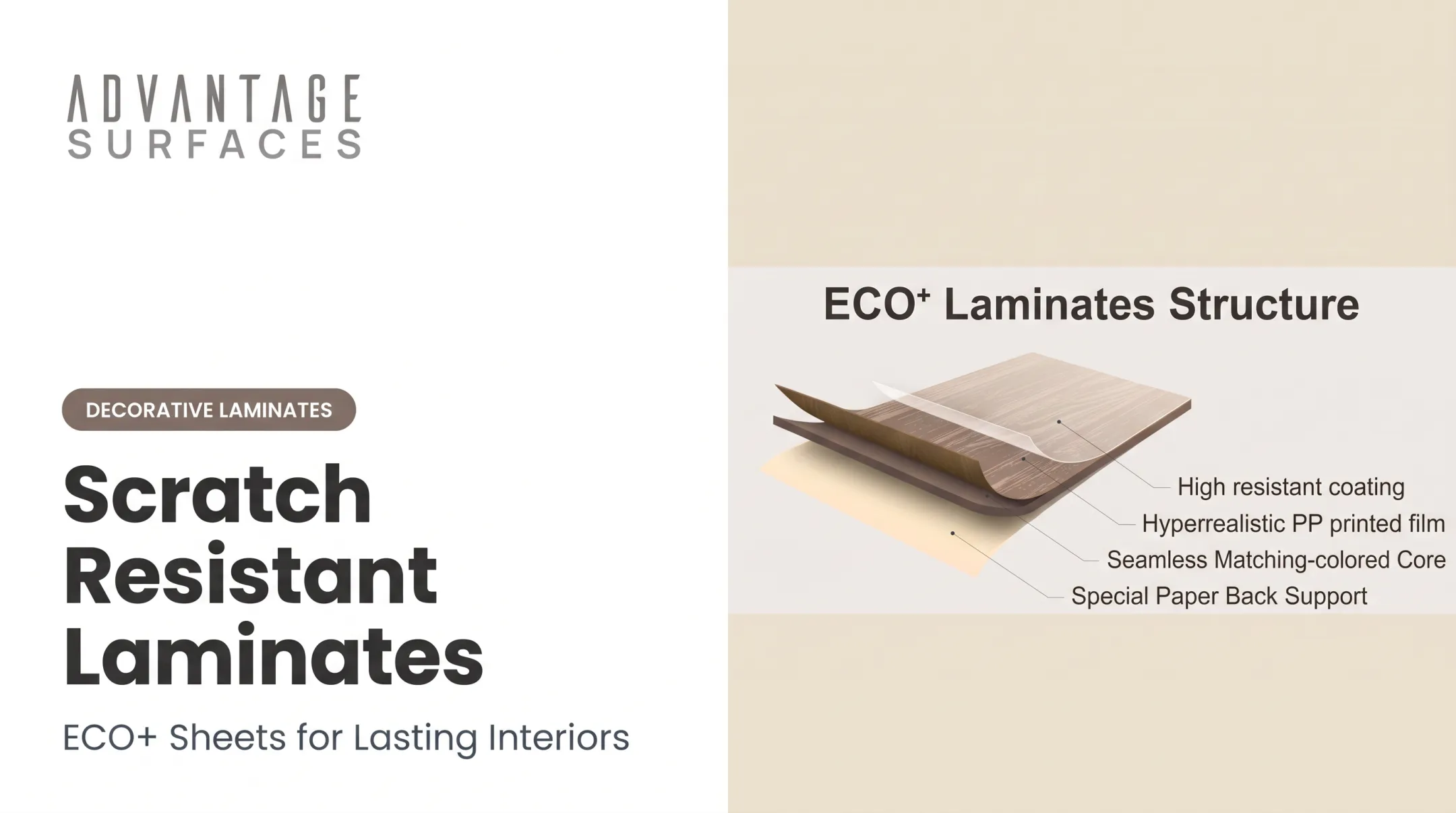
ECO+ sheets distributed by Advantage Surfaces USA, for example, use a seamless matching-colored core so cut edges at 90-degree corners don't reveal a visible black line. The installer still has to cut and bond it correctly for that benefit to show.
How Does Scratch Resistance Work?
Scratch resistance lives in the top coating or overlay, not in the gloss level. This layer is what resists everyday scuffs, abrasion, stains, and household or commercial chemicals. Industry HPL guides describe high-pressure laminate as surface papers treated with melamine resin, fused with phenolic-resin kraft paper under heat and pressure into a thermoset sheet, engineered for both horizontal and vertical use.
Lower-pressure alternatives, often called TFL (thermally fused laminate), press decorative paper directly onto the substrate. They cost less but generally offer lower scratch, wear, and impact resistance than true HPL, which matters if you're comparing bids that look similar on price but aren't the same product.
Texture, Color, and What You Actually See
Surface texture affects two things at once: physical wear resistance and visual concealment.
- A subtle texture scatters light and hides minor marks better than a mirror-flat surface
- Wood grains and varied patterns disguise scuffs more effectively than solid dark colors
- Lighter, patterned designs generally show less wear than uniform dark gloss
This is why Pebbled Leather Dim Grey and similar textured ECO+ finishes read as more forgiving in daily use than a flat, dark, high-gloss panel, not because the coating underneath is different, but because the surface pattern breaks up light reflection.
What Industry Testing Actually Measures
Scratch resistance, abrasion, staining, and impact are tested separately under standards like ANSI/NEMA LD3 and ISO 4586-2. ISO's surface-wear standard uses loaded abrasive wheels rotating against a sample, measuring revolutions to defined wear-through. It explicitly states this method doesn't apply to flooring-grade laminate.

A scratch test and a wear-through test measure different failure modes entirely.
Before comparing products, ask for:
- The specific test standard used (ANSI/NEMA LD3, ISO 4586, or similar)
- Coating type and sheet thickness
- Horizontal versus vertical use rating
- Chemical exposure limits
- Warranty language and required care instructions
Don't accept marketing terms like "premium" or "durable" as a substitute for actual test data. Ask the supplier what standard backs the claim.
Where High-Gloss Scratch-Resistant Laminates Work Best
High-gloss laminate earns its keep on surfaces that get looked at more than they get gripped, cut, or dragged across.
Strong fits include:
- Kitchen cabinetry and bathroom vanities
- Wardrobes and furniture fronts
- Desks and reception counters
- Wall panels and retail fixtures
- Commercial casework
Healthcare laminate documentation lists similar high-touch applications, including patient rooms, hallways, elevators, and waiting areas, where a wipe-clean surface and daily disinfection matter as much as appearance.
Matching Finish to Contact Level
Not every surface in a kitchen gets the same treatment. A cabinet door that mostly gets opened and closed is a different use case than a prep surface that takes daily knife contact.
- Low-contact fronts (cabinet doors, decorative panels): high gloss works well
- High-contact horizontal surfaces (desks, prep areas): consider matte or textured finishes, or confirm the sheet's horizontal-use rating
- Commercial, hospitality, and healthcare projects: factor in cleaning chemical frequency, replacement cycles, and how visible wear will be under facility lighting
Where to Use Caution
Skip high-gloss decorative laminate (or get explicit product confirmation first) for:
- Flooring (unless the specific product is engineered, tested, and warranted for floors)
- Outdoor or direct-sunlight exposure
- Surfaces near cooktops or direct heat sources
- Wet areas without a confirmed moisture specification
- Heavy-impact work surfaces
A cabinetry-grade laminate sheet is not a flooring product just because both are called "laminate." Floor-rated laminate carries its own wear classification and testing scope, and using a cabinet sheet underfoot will void any warranty protection you thought you had.
How to Choose the Right High-Gloss Laminate for a Project
Start with an honest assessment before browsing finishes.
- Define the surface orientation – horizontal (desks) or vertical (cabinet fronts, wall panels)
- Estimate traffic and contact type – daily hand contact, cutting, dragging hardware, or mostly visual
- Note moisture, heat, and sunlight exposure – near a sink, cooktop, or window
- Account for cleaning products used – mild soap, commercial disinfectant, or harsher solvents
- Factor in pets, kids, or commercial foot traffic
- Confirm replacement access – how easily the panel can be swapped if damaged

Comparing Gloss, Matte, and Textured Finishes
Gloss delivers the brightest, most reflective look. Matte and textured options conceal daily marks more effectively in high-contact zones. When you want a bright, polished look in a busy household or facility, use gloss on lower-contact areas and matte or textured finishes where hands, tools, or cleaning crews hit the surface most.
Color matters here too. Dark, solid colors under direct lighting reveal marks faster than varied wood-grain or textured patterns . Test an actual sample under your project's real lighting, not a showroom light box.
A Practical Option Worth Knowing
Advantage Surfaces USA LLC, a distributor of KD Panels (Keding), supplies KD Keding ECO+ laminate sheets built for this scratch-visibility problem. The sheets use an SGS-certified coating for scratch, stain, and chemical resistance on a non-toxic, food-grade polypropylene base that is formaldehyde-free.
Key details for project planning:
- Seamless color-matched cores that hide the black edge line at cut corners
- Wood-grain, solid-color, and textured designs, including metal, stone, marble, and leather looks
- More than 200 color options
- Standard 4 ft × 8 ft sheets from about $105.99 to $116.99, plus custom-cut sizes for fabricators
What Trade Buyers Should Confirm Before Ordering
- Sheet dimensions and available custom-cut sizes
- Minimum order quantities (or confirmation that none apply)
- Lead times and shipping terms
- Edge detail options
- Installation requirements and technical documentation
Order a sample first. Test it with your actual cleaning products, hardware, and lighting conditions before committing to a full cabinet or millwork run. A $35 sample book costs far less than discovering a mismatch after installing fifty sheets.
How to Maintain High-Gloss Scratch-Resistant Laminates
Daily care is simple, but the wrong cleaning routine undoes even the best coating fast.
Do this:
- Wipe dust and spills with a soft microfiber cloth and a manufacturer-approved mild cleaner
- Rinse with warm water and dry the surface after cleaning
- Use coasters, mats, or felt pads under items placed on the surface regularly
- Remove spills promptly, especially on light-colored or high-gloss panels
Avoid these entirely:
- Abrasive pads or scouring powders
- Harsh solvents or unapproved polishes
- Sharp blades or tools dragged across the surface
- Dragging metal or ceramic objects (pots, trays, hardware) across gloss finishes
Different Surfaces Need Different Routines
A reception desk wiped down multiple times daily needs a different cleaning cadence than a bathroom vanity. High-contact retail fixtures and healthcare surfaces often need more frequent cleaning with stronger approved disinfectants.
Confirm the product's documented chemical tolerance before you standardize a facility-wide protocol. The ECO+ coating cleans easily with a damp cloth for routine use, which simplifies care for most residential and light-commercial applications.

Document the care instructions and warranty terms in writing. Installers, cleaning crews, homeowners, and facility managers should all be working from the same playbook, not guessing at what "mild cleaner" means.
Frequently Asked Questions
Does gloss laminate scratch easily?
Gloss laminate with a quality protective coating resists everyday scuffs but isn't scratch-proof. Its reflective surface tends to make fingerprints and minor marks more visible than matte or textured finishes would.
What is the most scratch-resistant laminate flooring?
A suitable flooring product needs its own flooring-specific wear and scratch rating. A high-gloss decorative cabinet laminate isn't engineered or warranted for foot traffic. Always confirm the product is explicitly classified as flooring-grade before specifying it underfoot.
How can you tell if a laminate is scratch-resistant?
Review the manufacturer's verified test standard, technical data sheet, and intended-use rating rather than relying on marketing language. Request a physical sample and check the warranty terms before placing a large order.
Where are high-gloss scratch-resistant laminates best used?
Cabinetry, furniture, millwork, wall panels, reception areas, and retail fixtures are strong fits. High-contact, high-heat, outdoor, and flooring applications require product-specific confirmation first.
How should high-gloss laminate be cleaned?
Use a soft cloth with a manufacturer-approved mild cleaner, then rinse and dry. Avoid abrasive pads, harsh chemicals, and unverified polishing products, which can dull or damage the finish.