
The hard part is the choice. Which color or texture will still look right in two years? Will the finish handle daily use? What will the whole project cost, and will the sheet bond to the panel you already have?
This guide walks through styles, bedroom applications, performance, installation planning, maintenance, and healthier-material considerations, so you can shortlist finishes with confidence.
Key Takeaways
- Laminate is a surface layer, so the substrate decides whether the job succeeds.
- Judge finishes from physical samples in your own light.
- Repeat one undertone across pieces instead of matching everything.
- Compare installed cost, not sheet price alone.
- Follow the manufacturer's technical sheet for bending, adhesives, and cleaning.
What Are Decorative Bedroom Laminate Sheets, and Why Use Them?
What they are
A decorative laminate sheet is a thin finished surface bonded to a suitable substrate, such as a furniture panel, cabinet component, or wall panel. It is not structural. Plywood, MDF, or particleboard still carries the load.
ISO 4586-3 defines high-pressure laminate as sheets under 2 mm thick, normally bonded to a supporting substrate. Other surfacing options differ in clear ways:
- Veneer: natural wood, available in different species, laminated onto a substrate
- Paint: a liquid or powder coating, not a separately made sheet
- Thermoplastic films: PVC or polypropylene overlays, often formed around contours
- Prefinished panels: the sheet and core already bonded, so specs describe the assembly
Material families are not interchangeable. Conventional HPL uses resin-impregnated paper layers, while polypropylene-based sheets are a different construction. Check each product's technical specifications and never transfer numbers between them.
Why they suit bedrooms
Finishes run from woodgrain and solid colors to stone-inspired and textured looks. That range covers minimalist, contemporary, warm traditional, and hospitality-style rooms.
Practical benefits for wardrobes and furniture:
- Wipe-clean surfaces
- Resistance to everyday scratches and stains (confirm per product)
- A consistent finish you can repeat across a whole bedroom suite
Cost deserves honesty. Final price depends on sheet price, substrate, fabrication, labor, hardware, and waste. Resurfacing sound existing panels avoids buying new cores, but no universal saving over solid wood, veneer, or paint exists. Get quotes for your specific project.

Bedroom Applications and Design Ideas
Wardrobes and closet doors
Wardrobe doors fill a huge visual area, so this is the highest-impact spot. Pick the finish with wall color, flooring, handles, mirrors, and light in mind.
Directions that work:
- Single-color doors for a calm, minimal look
- Two-tone layouts, such as light lower doors under a woodgrain upper
- Woodgrain with a textured accent panel
- Matte and gloss contrast for subtle depth
Keep to one or two patterns per room. Competing grains look busy fast.
Beds, headboards, and feature panels
A headboard wall or bed surround becomes a focal point in laminate. Warm woodgrain suits a cozy room; soft neutrals suit a quiet one. Fluted or stone-inspired surfaces add drama when you want more contrast.
Light vertical wood paneling beside a bed can create a reading-nook feel.
The sheet needs a prepared, stable substrate and a suitable adhesive or fixing method. One technical guide specifies particleboard, MDF, or specified plywood and excludes direct application to plaster, concrete, or drywall. Mount a panel first, then surface it.

Dressers, nightstands, and built-ins
Laminate refreshes dressers, nightstands, shelving, vanity units, and built-in storage. High-touch areas show fingerprints and scratches first, so favor matte or lightly textured finishes in those spots.
A good rule: put the bolder pattern or texture on a small piece, such as nightstands, and keep the wardrobe in a calmer finish.
Accent walls, partitions, and millwork
Wall panels, reading nooks, room dividers, and custom millwork all take laminate. Grain direction, sheet layout, and seam placement shape the result. Sheet dimensions limit how far a pattern can match, so plan joints before cutting.
Room examples:
- Children's rooms: muted solids with durable, easy-clean surfaces
- Guest rooms: neutral woodgrain that suits most tastes
- Primary bedrooms: deeper tones or textures for warmth
- Hospitality-style rooms: consistent finishes repeated across units
Not every laminate suits every environment, so confirm intended-use limits.
How to Choose the Right Decorative Bedroom Laminate Sheet
Start with lighting and scale
Sherwin-Williams notes that light colors can make a small room feel bigger, while darker shades feel cozy and intimate. Apply that to laminate: light neutrals and soft sheens in compact or dim rooms, deeper colors and low-reflection textures in larger, brighter ones.
View samples in morning, afternoon, and artificial light. Screens rarely reproduce color, sheen, texture, or grain accurately.
Match the finish to daily use
- Matte or textured: quieter look, and everyday marks are often less obvious
- Gloss: brighter and more contemporary, but it highlights imperfections in the surface beneath
- Woodgrain and stone-inspired: visual warmth or luxury, with texture depth that may need a soft brush when cleaning
No finish is proven best at hiding fingerprints. Test samples with your own hands.
Coordinate without matching everything
Repeat one undertone or material reference across the wardrobe, bed, flooring, textiles, and walls. Exact matching tends to look flat.
Combinations worth trying:
- Light neutral with natural woodgrain
- Warm beige with muted green
- Gray with walnut
- A dark accent balanced by lighter surroundings
Confirm any pairing against the colors actually available.
Check technical and fabrication requirements
From the manufacturer's documentation, confirm:
- Thickness and sheet dimensions
- Bendability and crack resistance
- Edge treatment
- Substrate and adhesive requirements
- Cleaning guidance and intended-use limits
Curved doors, wrapped edges, 90-degree corners, and custom-cut panels may need different methods and experienced installers.
Plan quantity, budget, and samples
Measure every visible panel, then account for grain direction, doors, backs, mistakes, and cutting waste. For bigger jobs, ask a fabricator for a cutting plan. No reliable universal waste percentage exists, so estimate waste from your own layout instead.
Compare full installed cost, then request samples before ordering for a wardrobe, bedroom suite, or multiple rooms.
ECO+ Laminate Considerations for Bedrooms
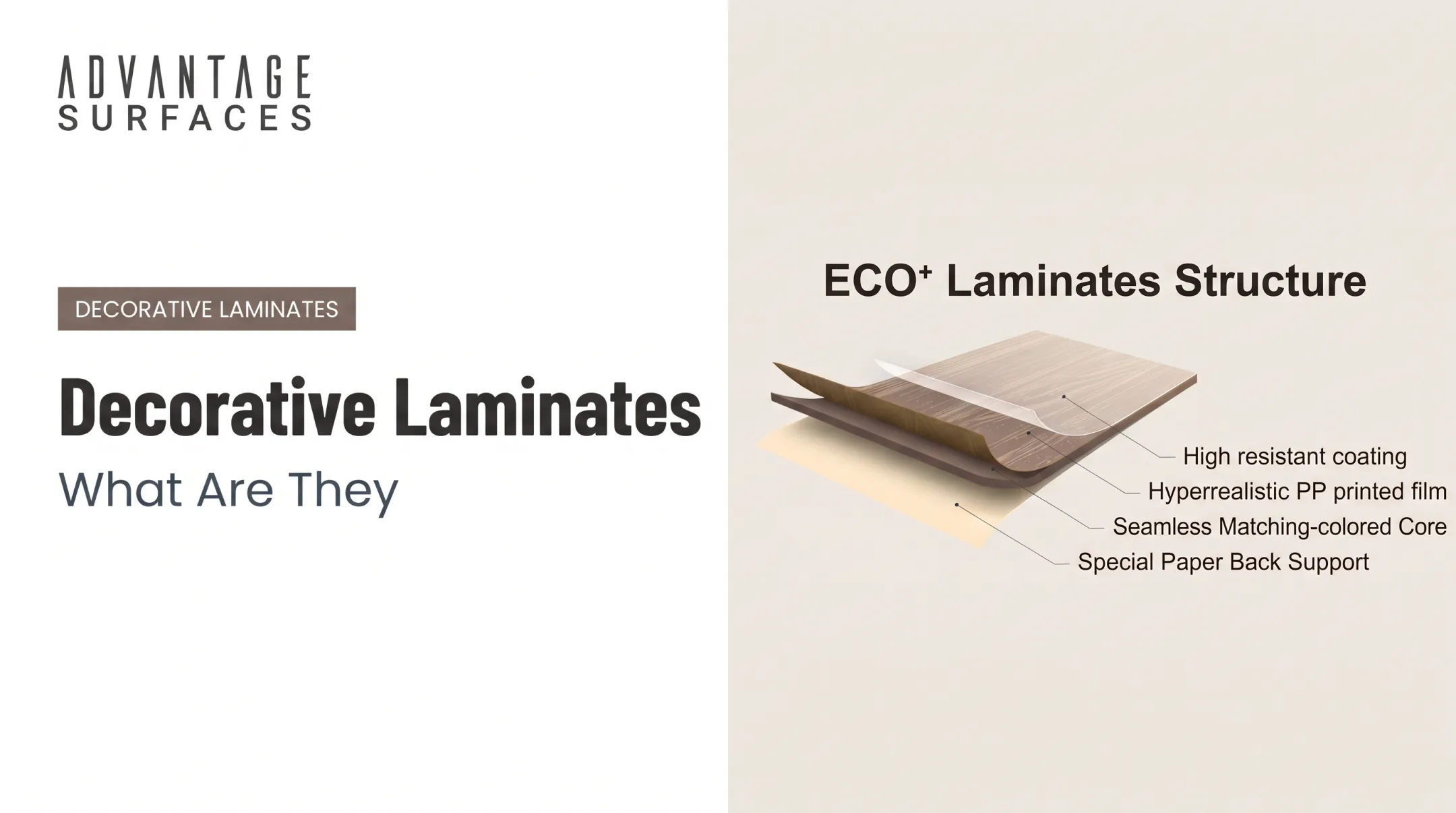
Advantage Surfaces USA, a distributor of KD Panels (Keding), supplies KD Keding ECO+ laminates for buyers who want design variety with eco-conscious materials. The sheets use food-grade polypropylene and are formaldehyde-free. Review current product documentation for exact specifications.
One caution: the sheet and the core are separate questions. Formaldehyde rules such as EPA's composite wood standards cover plywood, MDF, and particleboard, so a surface claim alone doesn't establish your core's compliance. Ask about both.
Relevant features for bedroom projects:
- SGS-certified coating with resistance to scratches, chemicals, and stains, useful on wardrobes and dressers
- 200+ colors across wood-grain, solid, and textured finishes, including metal, stone, and leather looks
- Hyperrealistic printing of wood grain and stone textures
- Seamless color cores that avoid dark edges at 90-degree corners
- Flexible, crack-resistant sheets for bending and cutting
- Standard 4 x 8 ft sheets from $105.99, plus custom sizes on request
- A $35 sample book that includes a $35 coupon for future purchases
Match performance expectations to the published technical data. Order the sample book or browse the collections at Advantage Surfaces USA to compare finishes before you buy.
Buying, Installation, and Care Checklist
Before ordering
Confirm these in writing:
- Application and panel measurements
- Finish name, color, sheet size, and thickness
- Substrate and edge details
- Quantity, lead time, and shipping terms
- Whether your installer or supplier offers cutting and fabrication support
Advantage Surfaces USA offers free standard shipping within the continental United States, with most orders delivered in 3 to 7 business days, subject to current terms. Expedited options are available by contacting the company.
Installation planning
Follow the manufacturer's instructions or hire a qualified fabricator. Planning covers:
- Preparing the substrate so it is clean, dry, and stable
- Cutting accurately and aligning grain
- Selecting the specified adhesive and bonding or pressing method
- Finishing edges, with ventilation during bonding
The technical guide cited earlier specifies conditioning face, backing, and substrate together before bonding. Never apply over damp, unstable, contaminated, or poorly prepared surfaces. For curved or wrapped work, confirm the allowable bend radius first.

Cleaning and maintenance
Wipe with a soft damp cloth and mild soap, then dry. Avoid abrasive pads, harsh chemicals, and standing moisture. Water pushed into seams can swell the substrate.
For stains, try a non-abrasive household cleaner first. For scratches, lifted edges, or impact damage, call the installer or supplier rather than improvising an unapproved repair.
Conclusion
The best laminate balances your visual goals with lighting, furniture coordination, surface use, fabrication needs, maintenance, and what the substrate can support.
Next steps:
- Shortlist two or three finishes that fit the room
- Request physical samples to check color and texture in your light
- Confirm technical details and total project cost
- Choose the sheet that fits both the space and how you will use it
Frequently Asked Questions
How much do wardrobe sheets cost?
Costs vary by collection, sheet size, thickness, finish, quantity, and shipping. Check current per-sheet pricing rather than relying on one average figure.
Which color laminate is best for a bedroom?
No single color wins. Room size, natural light, existing furniture, mood, and upkeep decide. Light neutrals, warm woodgrains, muted tones, and darker accents all work.
What is laminate paper?
Decorative paper is one layer in some laminate constructions. It differs from a finished laminate sheet and from the substrate beneath. Composition varies, so check the manufacturer's specifications.
Are laminate sheets a good choice for bedroom furniture?
Yes, when the substrate is prepared and installation is correct. You get design variety, consistent finishes, everyday durability, and easy cleaning.
How do you clean and maintain decorative bedroom laminate sheets?
Use a soft cloth and a manufacturer-approved mild cleaner. Avoid abrasives, harsh chemicals, and excess moisture, and get professional advice for damaged edges or surfaces.