
Introduction
Laminate shows up everywhere: kitchen cabinets, bathroom vanities, office casework, retail fixtures. It's doing two jobs at once, looking good and standing up to daily wear.
That dual role is why choosing one has gotten more complicated. Buyers now want realistic woodgrain, low-glare matte finishes, and surfaces that clean up fast. They also want materials made without formaldehyde and performance backed by actual testing, not marketing copy.
Many designers and fabricators struggle to separate the look of a laminate from how it's built, and that gap leads to mismatched expectations once a project is installed. This guide splits the decision into two parts: laminate finishes (how a surface looks and feels) and laminate types (how it's constructed). We'll compare both, then walk through a practical, project-based way to choose.
Key Takeaways
- Finish controls look and touch; type controls construction, fabrication, and durability
- Matte, gloss, textured, woodgrain, satin, and metallic finishes each carry different maintenance trade-offs
- HPL, TFL, and flexible laminates fit different substrates, budgets, and installation methods
- Selection depends on traffic, lighting, cleaning habits, and fabrication constraints, not appearance alone
- Always check physical samples under your project's real lighting before ordering
What Are Laminate Finishes and Types?
Laminate is a manufactured surface material bonded to a substrate, typically MDF, particleboard, or plywood. It gives you a decorative face plus a protective layer over the panel underneath.
Here's the distinction that trips people up:
- Finish refers to the visible, tactile surface treatment, such as matte, glossy, textured, or wood-grain
- Type refers to how the laminate is manufactured and intended to perform, such as high-pressure laminate (HPL), thermally fused laminate (TFL), or flexible laminate
Two sheets can look nearly identical on a sample board and still behave completely differently once installed, because the construction underneath determines how they hold up.
Where Laminate Shows Up in U.S. Interiors
Laminate is common across residential and commercial work:
- Kitchen and bath cabinetry, vanities, and furniture
- Wall panels and backsplashes
- Retail fixtures and store displays
- Office interiors and commercial casework
- Hospitality and healthcare facilities
Advantage Surfaces USA, a distributor of KD Panels (Keding), supplies ECO+ laminate as 4' x 8' sheets for cabinetry, wall cladding, furniture manufacturing, and custom fixtures, serving DIY homeowners and commercial fabricators.
Finish and construction need to be evaluated together. A matte wood-grain sheet built as HPL will fabricate, bend, and wear differently than the same visual pattern built as TFL. Don't assume a pretty sample tells you everything about performance.

Types of Laminate Finishes and Materials
Choosing laminate means making two linked decisions: what surface effect the space needs, and what construction will actually deliver that performance over time.
Surface Finishes
Matte and super-matte finishes have low reflectivity, which softens glare and tends to make fingerprints less obvious than on glossy surfaces. They suit contemporary, high-touch interiors where smudges are a daily concern. Exact anti-fingerprint performance varies by product, so check the manufacturer's spec sheet.
Gloss and high-gloss finishes reflect light directly, which can make small or dim rooms feel brighter. One manufacturer's finish guide, for example, describes its high-gloss option as having a mirror-like sheen suited to light-to-medium commercial use, compared to its matte option's more moderate reflectivity.
The trade-off: fingerprints, smudges, and fine scratches show up more readily, especially on darker colors.
Textured, woodgrain, and stone-look finishes use embossing and printed patterns to add visual depth and a more realistic feel. They work well where a tactile, natural look matters. Deeper grooves, though, can collect dust and need more deliberate cleaning than a flat surface.
Satin and specialty finishes split the difference between gloss and matte. This category includes:
- Low-sheen satin surfaces
- Metallic effects
- Suede-like and leather-textured finishes
- Solid colors and abstract patterns
Always confirm care instructions and light-exposure limits from the product documentation rather than assuming all specialty finishes behave the same.
Construction and Application Types
High-pressure laminate (HPL) consolidates multiple resin-impregnated layers under heat and pressure into a separate sheet, which is then bonded to a panel with adhesive. According to CPA's HPL overview, this construction is typically chosen where a more robust decorative surface is needed. Confirm heat, moisture, impact, and chemical ratings against your actual application before fabrication.
Thermally fused laminate (TFL) and other panel-bonded laminates differ by fusing the decorative layer directly to the substrate in one step, rather than as a separate sheet. This affects consistency, repairability, and what substrate ships with the product. Confirm these details before ordering, since the fabrication process isn't interchangeable with HPL.
Flexible laminate bends around curved cabinetry, rounded furniture edges, and columns without cracking. ECO+ laminates, for example, are built for bending and crack resistance, which simplifies work on non-flat surfaces. Still, confirm bend radius, adhesive compatibility, and substrate prep with the manufacturer before you cut anything.
Decorative and eco-conscious options deserve a closer look than "it's green because it says so." Ask about resin composition, emissions claims, coating certifications, and documentation. Formaldehyde-related standards and third-party emissions testing, such as UL's GREENGUARD certification, exist precisely because an attractive finish doesn't automatically mean a low-emission product.
ECO+ laminates distributed by Advantage Surfaces USA are one example of this category backed by documentation: food-grade polypropylene, formaldehyde-free construction, an SGS-certified coating, and seamless color-matched cores available across woodgrain, solid-color, and textured designs.

In short: finish decides how a surface looks and feels. Type decides how it's fabricated, what substrate it needs, and how it holds up.
How to Choose the Right Type of Laminate
The right laminate balances visual intent, daily use, fabrication limits, and long-term maintenance. Match finish and construction to real use, not whatever is trending this year.
Application and Exposure
Match the laminate to where it's going and how hard it'll be used:
- Residential cabinetry and furniture generally see lighter wear than commercial casework
- Bathrooms and healthcare settings need moisture and chemical resistance confirmed, not assumed
- Retail, hospitality, and office environments see more hands, more cleaning cycles, more abrasion
Also think about whether the surface is flat or curved, touched constantly, hit with direct sunlight, or exposed to abrasive contact. Each of those conditions should steer your finish and construction choice.
Appearance, Lighting, and Coordination
Gloss reflects light, matte softens it, and textured or wood-grain finishes add depth. None of that shows up accurately on a screen. Hold samples next to your actual existing surfaces, flooring, hardware, and wall colors before deciding.
A few coordination notes:
- Lighter finishes tend to open up smaller spaces
- Darker or heavily patterned finishes create contrast and visual weight
- Realistic wood or stone patterns should be checked for grain direction and repeat across adjoining doors or panels
Maintenance and Durability
Smooth surfaces generally wipe clean faster than deeply textured ones, which can trap dust in recesses. High-gloss surfaces show marks more readily than matte. ECO+ laminates, for instance, are built to clean with a damp cloth under normal conditions, though tougher stains may need a non-abrasive household cleaner (avoid anything abrasive or harsh).
For scratch, stain, and chemical resistance, don't rely on general claims:
- Pull the manufacturer's spec sheet for the specific product
- Check test documentation for your exact exposure conditions
- Verify ratings match commercial, healthcare, or hospitality requirements where applicable
Fabrication, Edges, and Installation
Before ordering, confirm:
- Sheet dimensions, thickness, and bendability
- Adhesive compatibility and substrate requirements
- Seam strategy and edge treatment
- Whether color continues through the core
Seamless or color-matched cores matter most at exposed edges and 90-degree corners, where a mismatched core shows up as a dark line. ECO+ sheets use a seamless, color-matched core specifically to avoid that black-edge look, but always confirm the actual fabrication guidance for your chosen product.
Budget, Sourcing, and Sampling
Compare total project cost, not just sheet price. That means substrate, labor, waste, tooling, edge finishing, shipping, and future replacement availability all factor in.
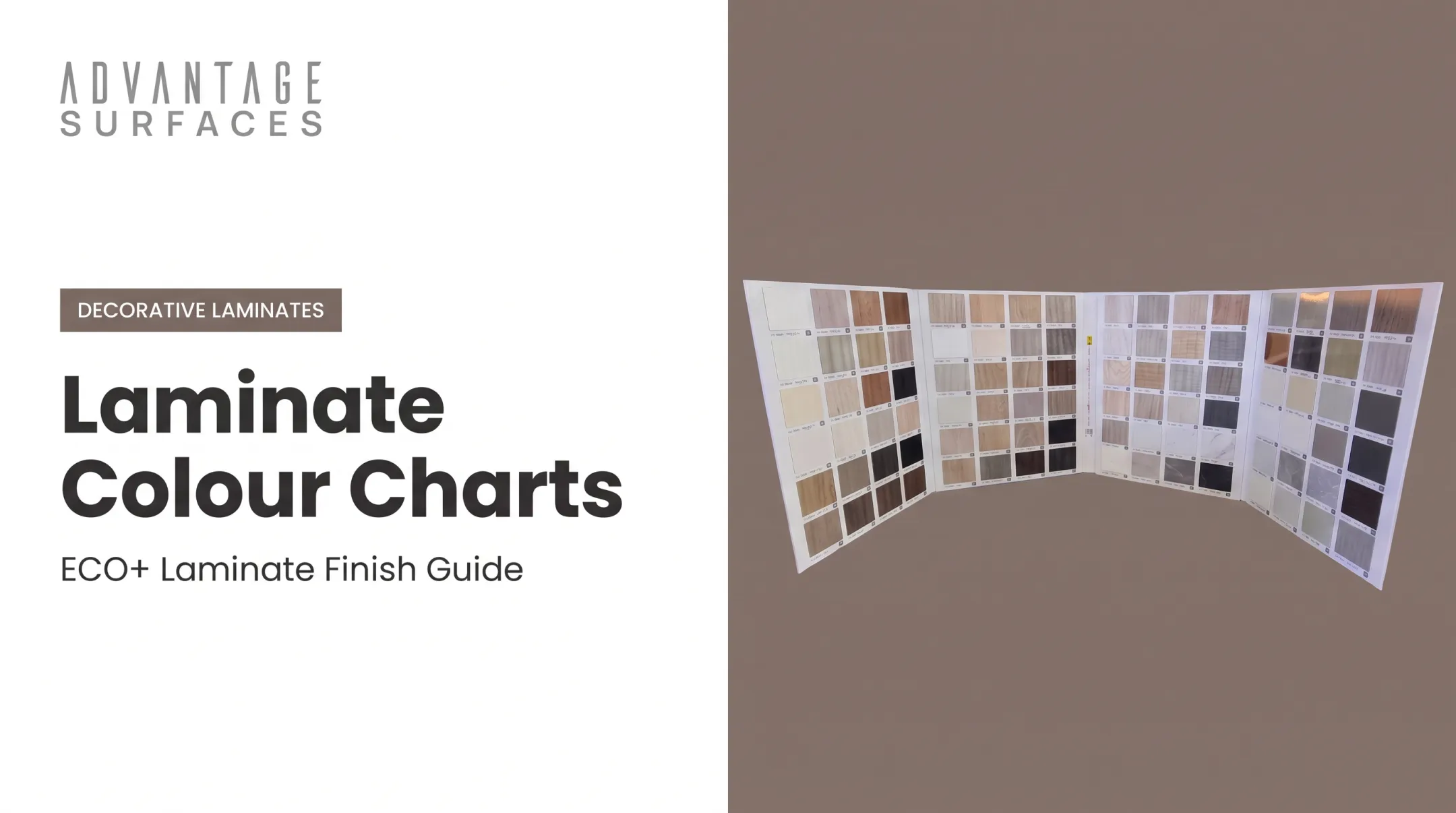
Before committing to a large order, get your hands on physical samples. Advantage Surfaces USA's $35 sample book, which includes a $35 coupon toward your first order, lets you check color, texture, edge appearance, and light reflection against your actual project materials before you buy sheets.

What to Check Before Finalizing a Laminate
A few final checks can save you from an expensive mismatch:
- Don't choose a finish from a screen. Inspect a physical sample under the project's natural and artificial lighting; colors and sheen shift more than people expect.
- Don't confuse finish with performance. A matte or glossy look tells you nothing about substrate, coating, thickness, or chemical resistance on its own. Confirm those separately.
- Weigh the trade-offs of statement finishes. High-gloss, deep-textured, dark, or delicate specialty surfaces bring fingerprint, glare, dust, or scratch trade-offs you should accept before you commit.
- Lock down fabrication details early. Confirm sheet size, grain direction, color consistency, bend radius, edge visibility, adhesive, lead time, and extra quantity for waste and future repairs.
Conclusion
Laminate finishes shape how a surface looks and feels; laminate types determine how it's built and what it can handle. Matte, gloss, textured, wood-grain, satin, and metallic finishes each come with real trade-offs in glare, upkeep, and visible wear, so there's no single "best" option.
The right call comes from matching the laminate to its environment, the fabrication method you're working with, and your actual maintenance plan. Before you order, confirm the decision with a physical sample and the manufacturer's documentation.
Advantage Surfaces USA's ECO+ collections and sample book are one way to check color, texture, and performance claims before committing to a full project order.
Frequently Asked Questions
What is a good alternative to laminate flooring?
Decorative surfacing laminates for cabinets and furniture are a different product from laminate flooring. If you're looking at floors, consider engineered wood, luxury vinyl, or tile instead, depending on your moisture, durability, and installation needs.
What are the different types of laminate finishes?
Common finishes include matte, gloss, satin, textured, wood-grain, stone-look, metallic, suede-like, and solid-color options. Each differs in reflection, tactile feel, maintenance demands, and overall visual effect.
What is the new trend in laminate flooring?
Flooring trends should be researched separately from decorative interior laminates since they're different product categories. For decorative laminates, natural-looking wood patterns, low-sheen textures, and sustainable materials are currently popular.
Is matte or glossy laminate better for cabinets?
Matte tends to work better where low glare and less visible smudging matter most, while gloss can brighten smaller or darker rooms with a polished look. Let your traffic levels, cleaning habits, and the specific product spec guide the final call.
Are textured laminates difficult to clean?
Shallow textures usually wipe clean with routine care, but deeper embossing can trap dust and need more detailed attention. Always follow the manufacturer's specific care guidance rather than a general cleaning routine.