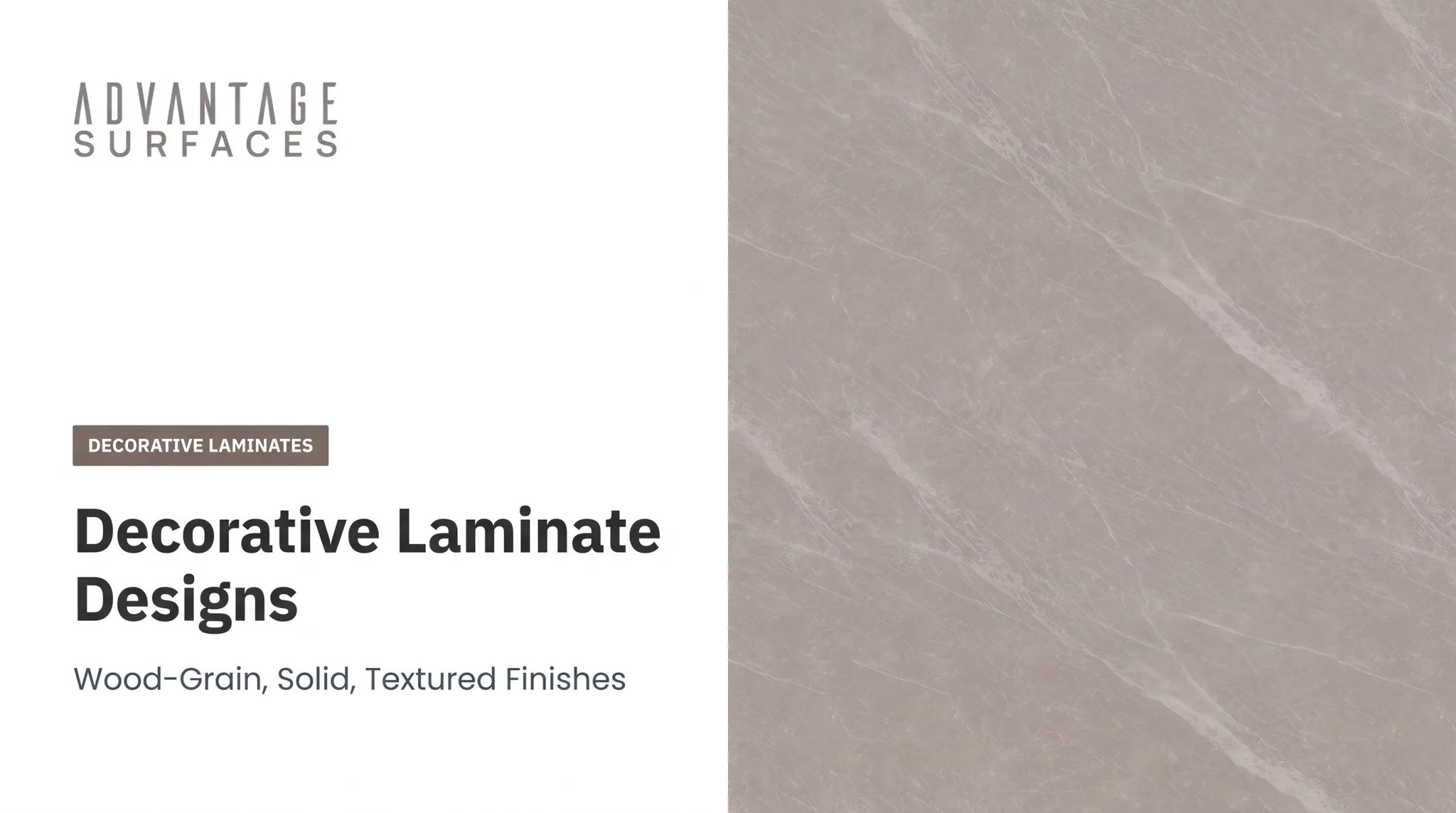

Wood-grain, solid-color, and textured finishes each bring different strengths to furniture, cabinetry, wall systems, and commercial casework. The right pick depends on room function, lighting, durability needs, and the mood you're after.
This guide walks through the main design categories, how to match them to your space, real application ideas, and the performance details worth checking before you commit to a full project order.
Key Takeaways
- Three core design directions: natural wood grain, versatile solid colors, and tactile textured finishes
- Room use, lighting, and nearby materials should drive your finish selection, not just personal taste
- Coordinate grain direction, edge appearance, and finish transitions before cutting begins
- Always review physical samples under your actual project lighting before finalizing an order
Explore the Decorative Laminate Sheets Design Collection
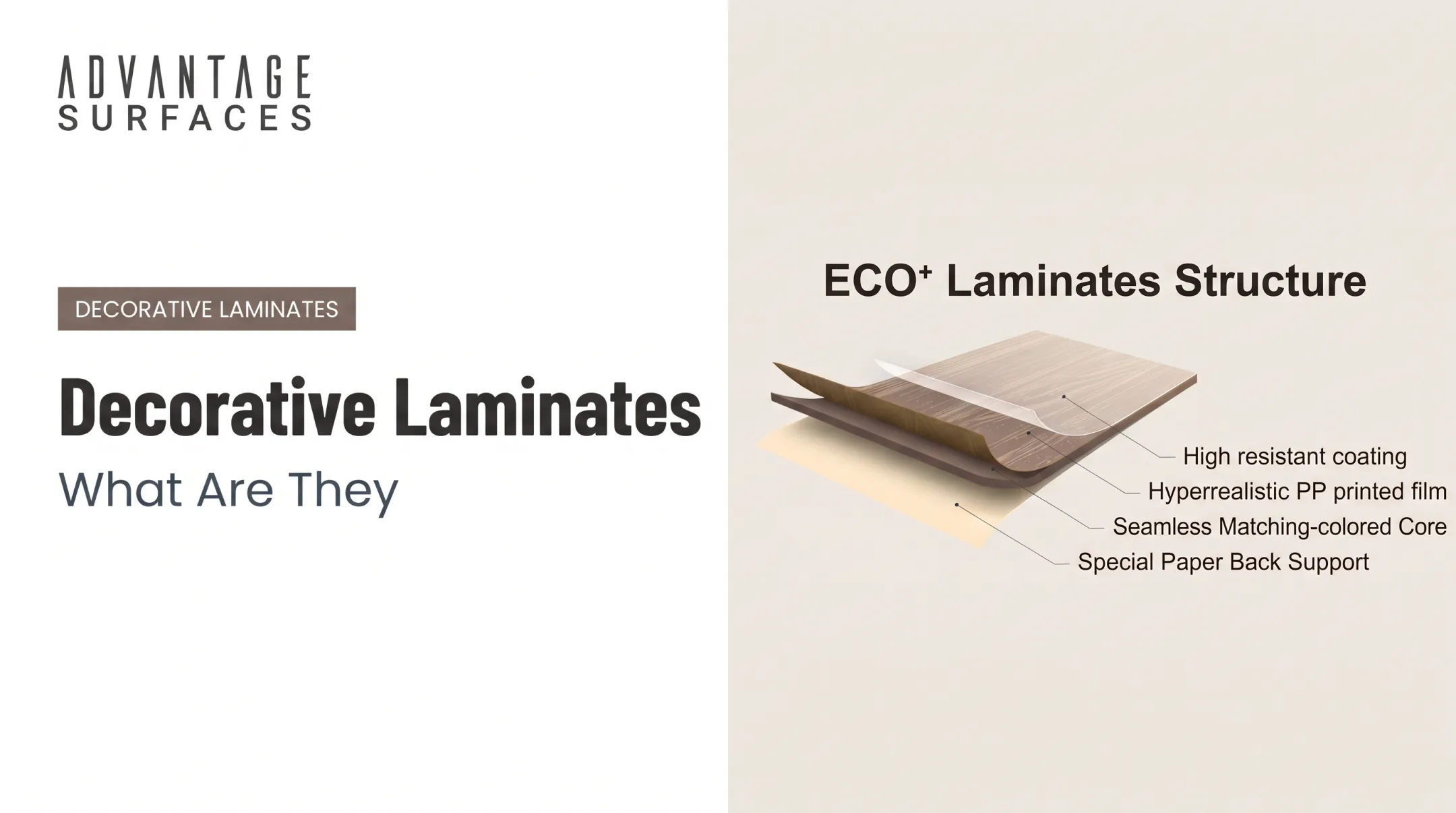
Advantage Surfaces USA, a distributor of KD Panels (Keding), supplies the KD Keding ECO+ laminate line, a collection built around three design directions that cover most residential and commercial surfacing needs. The lineup includes wood-grain, solid-color, and extended textured finishes, all manufactured as polypropylene-based sheets rather than traditional paper-core HPL.

Wood-Grain Designs
The Wood-Grain Collection brings natural character to kitchens, closets, cabinetry, furniture, and hospitality wall panels. Options include:
- Maple - light, fine grain suited to brighter interiors
- Eucalyptus - warm mid-tone with a contemporary feel
- Walnut - deep, rich tone for a more formal look
- Oak - classic linear grain with broad design flexibility
Individual 4' x 8' sheets in this collection start at $105.99.
Solid-Color and Textured Finishes
Solid-color laminates anchor contemporary schemes and provide visual balance next to patterned surfaces. The Solid Color Collection offers more than 200 options, including a muted Morandi palette, across Silky Matte and Sandblasted finishes. These work well on cabinetry, furniture fronts, workstations, and retail fixtures where a clean backdrop matters more than a bold pattern.
The Extended Collection adds depth through texture, referencing metal, stone, marble, and leather. Pebbled leather and brushed metallic sheets, for instance, give feature walls or accent panels a tactile quality that a flat solid color can't deliver.
How the Printing Works
Decorative patterns on laminate sheets come from printed decor paper, either gravure-roll or digital. The physical surface finish (gloss, matte, or textured) comes from press plates applied during the pressing and curing stage, according to a proHPL technical leaflet.
That's why a wood-grain sheet can look lifelike while still being a manufactured, consistent product rather than solid wood or veneer.
Before specifying a finish, always check current ECO+ collection images, finish names, and technical sheets directly rather than relying on older color codes, since availability and naming can shift between catalog updates.
How to Choose a Decorative Laminate Design
Start with function, not aesthetics. A decorative wall panel in a low-traffic hallway has different priorities than a hospital reception counter.
Match selection priorities to use:
- Low-use decorative panels: visual impact matters most
- Frequently touched cabinetry: surface resistance and cleanability
- Kitchens and baths: moisture and heat tolerance
- Offices and retail fixtures: brand consistency and wear resistance
- Institutional and hospitality casework: tested durability for heavy traffic
Consider Mood and Lighting
Warm wood grain tends to make a space feel inviting. Restrained solid colors support a minimal, modern language. Tactile textures work best as a feature element rather than covering an entire room.
A finish that looks warm under afternoon sun can shift cooler under LED task lighting. Architectural Digest recommends evaluating samples in the actual room, under different light conditions throughout the day, before finalizing a selection.
The same logic applies directly to laminate: hold your sample sheet next to the flooring, hardware, and wall color you're planning to use.
Coordination Principles
Too many competing patterns can make a room feel chaotic. A simpler approach:
- Pick one dominant finish (often the largest surface area)
- Choose one supporting finish that complements it
- Add accents sparingly, reserved for a single feature element
Before cutting, fabricators should also check sheet direction, repeat scale, and grain matching across panels. A wood grain that doesn't align between adjacent cabinet doors stands out immediately.
Sample comparison checklist:
- Color accuracy under your lighting
- Surface feel (smooth, matte, textured)
- Edge appearance at cut corners
- Cleaning requirements for the setting
- Intended substrate compatibility
- Installation or fabrication method
- Availability for your full project quantity
Request Advantage Surfaces USA's material samples before finalizing your specification. A $35 sample book is available and includes a $35 coupon toward a future order.
Decorative Laminate Design Ideas for Residential and Commercial Spaces
Kitchens and Bathrooms
Wood-grain cabinetry paired with a complementary solid-color backsplash or island treatment is a reliable combination. Check product documentation for moisture, heat, substrate, and edge-detail limitations specific to your application before finalizing the design.
Living Spaces and Home Offices
TV units, wardrobes, headboards, desks, and shelving all benefit from a single focal treatment rather than multiple competing finishes. A textured accent panel behind a headboard, for example, creates contrast without overwhelming the rest of the room.
Commercial Offices and Reception Areas
Solid colors, refined wood grain, and subtle textures support a professional brand environment across desks, storage units, and reception millwork. The goal here is usually consistency, since these surfaces need to photograph well and hold up for years.
Retail, Hospitality, Education, and Healthcare
These settings demand coordinated casework: room dividers, displays, service counters, and high-touch surfaces. Specify grades suited to the traffic level and setting, and confirm tested performance matches the intended use.
Curved and Custom Applications
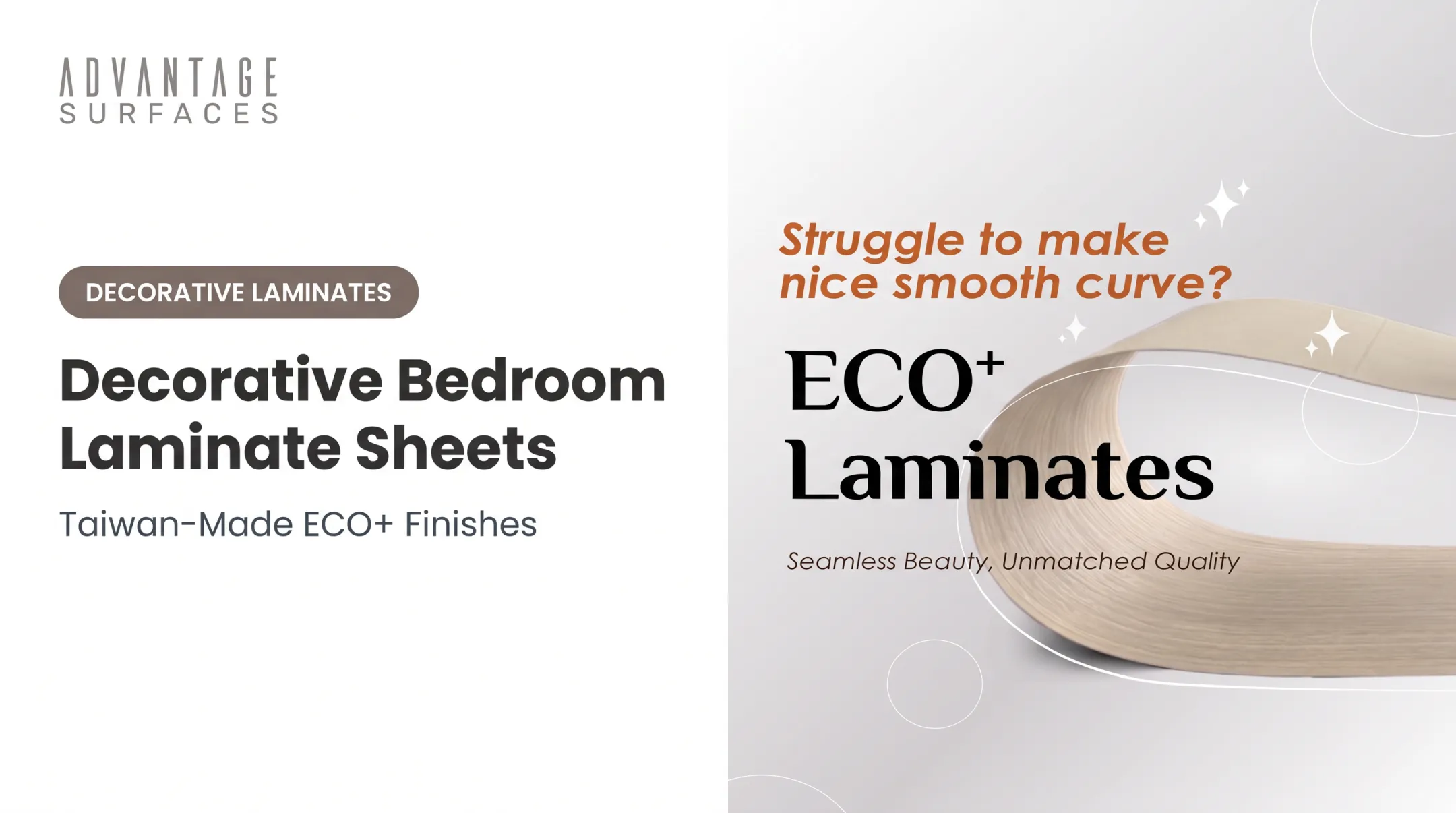
Flexible, crack-resistant laminates support rounded furniture edges, curved cabinetry, and distinctive millwork details. Before specifying a curved application:
- Verify the minimum bend radius for your chosen sheet
- Confirm the fabrication method (heat-forming versus cold-bending)
- Check installation requirements with your substrate
Custom pairings worth trying include a textured leather-look accent wall inside a solid-color frame, or one wood-grain focal cabinet run against otherwise neutral cabinetry. The City Melody G Residence project, for instance, pairs light wood-grain cabinet doors with black open shelving and glass-front storage for contrast without clutter.
Performance, Health, and Sustainability Considerations
Surfaces that resist scratches, stains, and chemicals and clean with a damp cloth save real maintenance time, especially in kitchens and high-traffic commercial areas. ECO+ laminates are built around this kind of everyday resistance rather than unverified durability timeframes.
What's actually documented for ECO+ laminates:
- Non-toxic, food-grade polypropylene construction
- Formaldehyde-free composition
- SGS-certified coating for scratch, stain, and chemical resistance
- Low-TVOC materials suited to lower-emission interiors
Formaldehyde regulation in the U.S. generally targets composite-wood products like particleboard and MDF. The EPA sets emission limits ranging from 0.05 ppm for hardwood plywood up to 0.13 ppm for thin MDF.
A formaldehyde-free laminate surface is a different claim entirely. Review the specific documentation for your project rather than assuming one standard covers everything.
A seamless color core also makes a visible difference. Exposed edges and 90-degree corners look cleaner without the black line that shows up on some laminate constructions, which matters in cabinetry, furniture, and custom millwork where edges stay visible.
If your project has specific green-building or indoor-air-quality requirements, confirm those separately. Product-level claims like "formaldehyde-free" or "food-grade PP" don't substitute for independent certifications such as GREENGUARD or LEED credit documentation, which apply at the product and project level respectively.

Conclusion
Successful laminate selection balances visual appeal, room function, fabrication requirements, maintenance expectations, and how your chosen surfaces work together across the whole interior.
With more than 200 color and finish options spanning wood grain, solid color, and textured collections, Advantage Surfaces USA offers 4' x 8' sheets starting at $105.99, plus custom sizing on request and free shipping across the continental United States.
Compare the collection, request physical samples, and reach out at info@advantagesurfacesusa.com or (786) 484-9387 for project guidance or bulk sourcing.
Frequently Asked Questions
What makes a design visually appealing?
Visual appeal comes from balance, contrast, proportion, and color harmony, plus texture and lighting suited to how the space is used. Ignoring real room function rarely feels right, no matter how strong the materials look.
What are the main decorative laminate sheet designs available?
The three main categories are wood-grain (for warmth and natural character), solid-color (for clean, versatile backgrounds), and textured finishes referencing stone, metal, or leather. Each suits different applications, from cabinetry to accent walls.
How do I choose a laminate design for my room?
Consider the room's purpose, lighting conditions, existing materials like flooring and hardware, traffic levels, and cleaning demands. Then match the finish to the mood you want, whether that's warm and inviting or minimal and restrained.
Can decorative laminate sheets be used for curved applications?
Yes, flexible laminates can support curved cabinetry and rounded millwork details. Confirm the minimum bend radius, substrate compatibility, adhesive requirements, and fabrication method before starting a curved project.
Are decorative laminate sheets easy to clean and maintain?
Routine cleaning typically involves a damp cloth with mild soap and water, with non-abrasive cleaners for tougher stains. Avoid harsh chemicals and always check the manufacturer's specific care instructions.
Should I request a laminate sample before ordering?
Yes. Physical samples let you judge color, feel, sheen, and grain scale under your project lighting, which photos can't match. Advantage Surfaces USA offers a sample book and individual samples before you order.