
The hard part is choosing. Catalogs offer hundreds of options, and a swatch on a screen rarely shows how a finish behaves in your lighting. This guide covers popular design directions, room-by-room advice, color coordination, maintenance, material health, and how to review samples before you order.
Key Takeaways
- Pick a laminate for its style and for the room's moisture, cleaning, traffic, and light.
- Use woodgrain, solids, stone looks, textures, and gloss selectively, not everywhere.
- Compare physical samples, edges, grain direction, and care instructions before ordering.
- For commercial or health-focused projects, read technical and material documentation too.
What Are Decorative Laminate Designs?
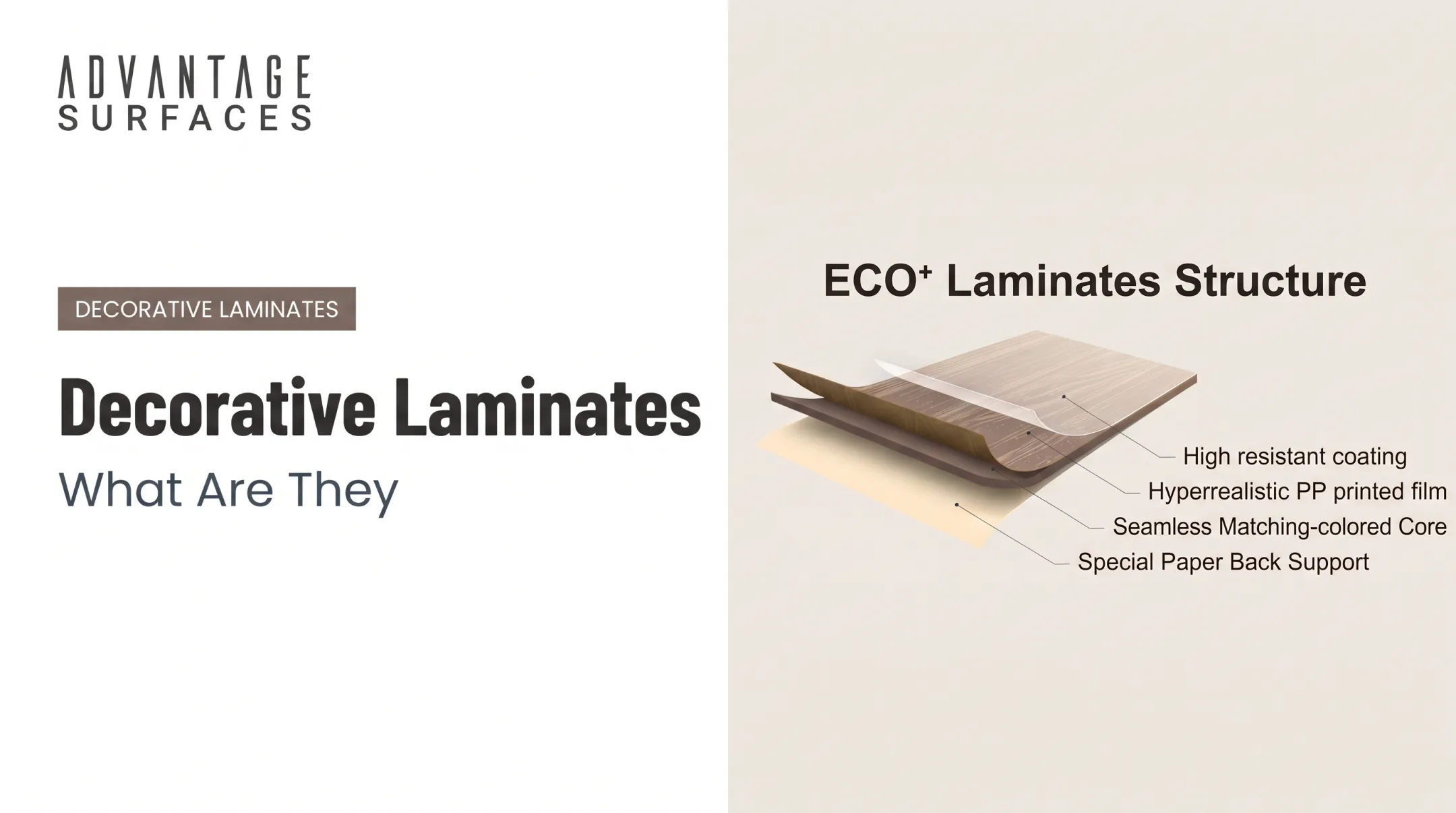
Decorative laminate is a finished surfacing material bonded to a suitable substrate. The printed or colored layer is what you see. The cabinet box, plywood, MDF, or furniture panel underneath provides the structure. Wilsonart's technical data states that its laminate is not structural material, so you always specify both layers.
When comparing designs, you are weighing these variables:
- Color and printed pattern
- Texture and sheen
- Material imitation (wood, stone, metal, leather)
- Edge appearance
- Sheet size and thickness
- Intended application
The audience is broad: homeowners, designers, contractors, cabinet shops, millwork fabricators, furniture makers, and commercial project teams. Sheet formats are typically 4 ft × 8 ft, though availability varies by design.
10 Decorative Laminate Design Ideas for Modern Interiors
Woodgrain and Natural-Material Designs
Woodgrain is the safest way to add warmth. Oak, walnut, maple, eucalyptus, and elm finishes suit kitchens, closets, casework, and feature walls. ECO+ options range from honey-golden eucalyptus to light taupe paulownia and warm cherry.
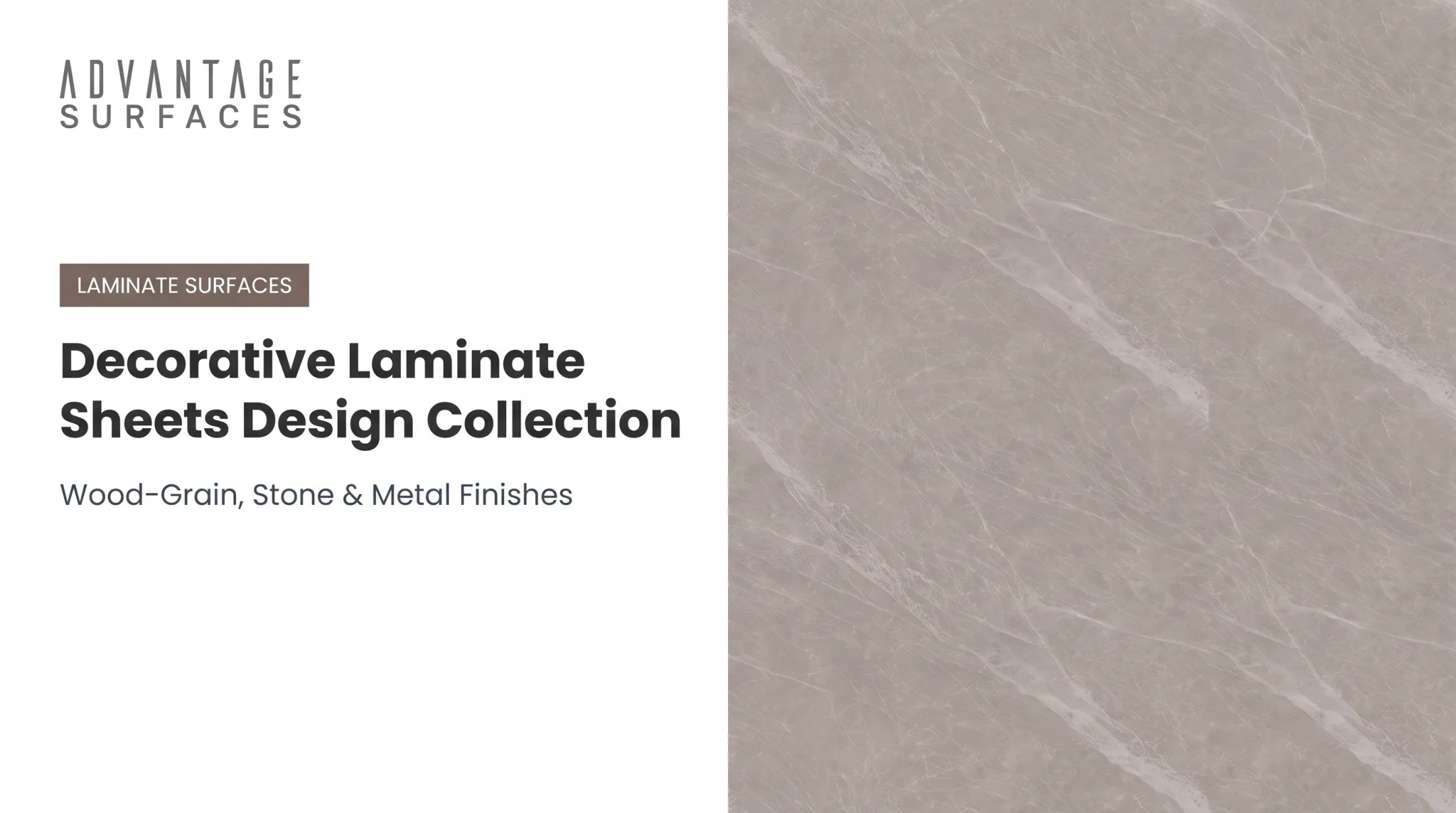
Stone, marble, and concrete effects work as the cooler counterpoint. A marble-look island next to matte gray cabinets gives an architectural feel without the sealing and staining worries of real stone.
Solid-Color and Two-Tone Designs
Solids are a clean foundation for minimalist and commercial spaces. Muted palettes, such as the Morandi series with its skin-like texture, feel calm and current.
Two-tone schemes separate cabinets, doors, drawers, or islands. Keep one dominant neutral and add a darker or more expressive accent on a smaller component. Wilsonart's 2026 Strata patterns, for example, are designed to layer with woodgrains.
Geometric, Graphic, and Abstract Designs
Lines, blocks, checks, stripes, and abstract graphics create a focal surface. Before choosing one, consider:
- Room size, since large graphics overwhelm small rooms
- Nearby patterns that might compete
- Seam placement across the repeat
- Whether it covers a whole surface or serves as an accent
Textured, Fluted, Leather, and Textile-Inspired Designs
Texture adds depth that flat color cannot. Pebbled leather finishes, such as buttercream or taupe, suit feature walls, cabinet fronts, reception desks, and display fixtures. Subtle textures work across broad areas. Pronounced ones belong on smaller focal pieces.
Matte, Gloss, Metallic, and Reflective Finishes
Matte finishes read quiet and low-reflection. Gloss and metallic effects bounce light and draw the eye. Formica notes that gloss reflects light directly, so the same panel can look different under different lighting.
Brushed metallic looks, like brass or rose gold, add shimmer. Silky matte platinum or sandblasted silver stay subtler. For each collection, check:
- Availability in your chosen size
- Cleaning requirements
- Fingerprint visibility
- Appearance under your actual lighting

How to Choose a Decorative Laminate Design by Room and Use
Kitchens, Bathrooms, and Utility Areas
Before you pick a finish, weigh the room conditions that affect performance:
- Moisture exposure and how often surfaces get cleaned
- Lighting, cabinet layout, and appliance coordination
- Match with flooring, backsplashes, and hardware
Appearance alone should not decide wet-area suitability. Water entering seams can swell a substrate, so check the manufacturer's guidance for moisture conditions.
Living Rooms, Bedrooms, and Wardrobes
Match the finish to the mood you want:
- Warm wood-grains for cozy bedrooms
- Soft neutrals for calm living spaces
- Textured accents for headboards and media units
- High-contrast designs for one feature wall
Wardrobe doors, shelving, and built-in storage are practical places to start. A light wood-grain wall with black shelving and glass display doors shows how contrast can work in built-ins.
Furniture, Cabinetry, and Custom Millwork
Fabricators should confirm these details before cutting:
- Grain direction and repeat consistency
- Corner treatment, visible edges, and panel joins
- Cutouts, sheet dimensions, and total quantity
If a design has a directional pattern, lock in sheet size and count before you commit. Running short mid-project often means a mismatched second batch.
Offices, Retail Fixtures, and Hospitality Interiors
Balance these project needs when you specify a design:
- Brand identity and visual impact
- Cleaning demands and traffic levels
- Room for future expansion or refreshes
Reception desks, display fixtures, workstations, wall panels, and casework all suit laminate. Order extra sheets for replacements, since designs can sell out.
Healthcare, Education, and Other High-Use Environments
Prioritize performance factors that high-use spaces demand:
- Cleanability and chemical exposure
- Impact risk and occupant well-being
- Project-specific code requirements
A decorative finish still needs the right substrate and installation system. Antimicrobial claims also deserve care: Formica states its antimicrobial technology does not protect users against disease organisms or replace good cleaning.

How to Combine Laminate Colors, Patterns, and Finishes
Build a Coordinated Palette
Start with a simple structure:
- One dominant surface
- One supporting color or material look
- One optional accent
Avoid mixing unrelated patterns on every surface. Undertones matter too. A nominally white laminate can carry red undertones, so a very pale warm-white ash and a cool gray solid will not behave the same beside a woodgrain. Compare them side by side.
Balance Pattern Scale, Texture, and Sheen
A large graphic or strong woodgrain needs quieter neighbors. A subtle texture can support a bolder color.
Matte and reflective finishes also shift under natural, overhead, and task lighting, so view them in each condition where possible.
Plan Edges, Hardware, and Transitions
Coordinate laminate with the surrounding details:
- Edge treatment and handles
- Metalwork and lighting
- Flooring, wall paint, and grout
Brass pendants beside matte gray cabinets, for instance, tie the metal tones together.
Order physical samples before you buy. Digital swatches often look different from the finished sheet, so check real chips under your project lighting.
What to Check Beyond Appearance: Durability, Maintenance, and Sustainability
Match Performance Requirements to the Application
Do not assume every decorative laminate performs the same. Review technical documentation for:
- Scratch and stain resistance
- Chemical exposure
- Moisture conditions
- Impact risk
- Flexibility
- Recommended substrates
Review Edges, Corners, and Installation Details
Dark edges, exposed cores, tight bends, seams, cutouts, and 90-degree corners all affect the finished look. Seamless color-core laminates avoid the dark line that shows at 90-degree corners on standard sheets.
Plan Cleaning and Long-Term Care
- Follow the manufacturer's cleaning instructions
- Use a damp cloth with mild soap where recommended
- Avoid abrasives and harsh chemicals
- Consider fingerprint visibility and texture on high-contact surfaces
Consider Material Health and Responsible Sourcing
Look for clear information on emissions, chemical composition, certifications, and recycled or recyclable content. Vague "eco-friendly" wording is not evidence. Emissions certification, paper sourcing, ingredient disclosure, and life-cycle reporting each cover different attributes. None of them replaces a wear or fire test.

ECO+ as an Example of a Design-and-Performance Option
Advantage Surfaces USA, a distributor of KD Panels (Keding), supplies KD Keding ECO+ laminates for buyers who want non-toxic, design-led surfacing. Specs include:
- Food-grade polypropylene construction, formaldehyde-free
- An SGS-certified coating for scratch, chemical, and stain resistance
- Flexible, crack-resistant sheets for bending and curved work
- Seamless color cores at 90-degree corners
- 200+ colors across woodgrain, solid, and textured designs
- 4 ft × 8 ft sheets from $105.99, plus custom cuts and a $35 sample book
Confirm current specs and substrate recommendations before specifying.
Frequently Asked Questions
What is Advance laminate?
"Advance laminate" may refer to a particular brand or product range, not a universal category. Verify the manufacturer, construction, intended use, and current product documentation.
Is Advance laminate good?
It depends on the specific product, application, and installation. Compare technical specifications, warranty terms, finish quality, and care instructions.
What is the cost of Advance laminate?
Price varies with sheet size, thickness, finish, quantity, customization, shipping, and supplier. Request a current quote rather than relying on a generic figure.
What decorative laminate design is best for kitchen cabinets?
Woodgrain hides wear and adds warmth, solids look clean, and matte reduces glare and fingerprints. Weigh cleaning, moisture, lighting, hardware, layout, and how the sample looks in your kitchen.
How can I compare decorative laminate samples before ordering?
View samples in your project's lighting and beside flooring and hardware. Inspect texture, sheen, and edges, then confirm technical suitability and available sheet sizes.