
This guide covers laminate sheets used for interior surfacing, not laminate flooring. You'll find guidance on benefits, color selection, applications, specifications, cost factors, and how to order.
The hardest part of choosing a solid color isn't finding options. It's picking one that complements your lighting, cabinetry, flooring, and fixtures while hitting the right level of contrast for the room. Get that wrong, and even a well-made laminate can feel off.
Key Takeaways
- Solid color laminates span light, mid-tone, dark, muted, and bold families, fitting both quiet and statement-making designs
- The right color depends on lighting, surrounding materials, room size, and whether the space is residential or commercial
- Physical samples matter more than screen colors; always confirm sheet dimensions, thickness, finish, and care requirements before ordering
- A matching color core produces cleaner exposed edges than a dark core, especially at visible 90-degree corners
What Are Solid Color Laminates?
A solid color laminate is a manufactured surfacing sheet with a single, consistent color across its decorative surface. That's the key difference from wood-grain, marble, stone, terrazzo, or patterned laminates, which rely on printed texture and visual movement.
Construction at a Glance
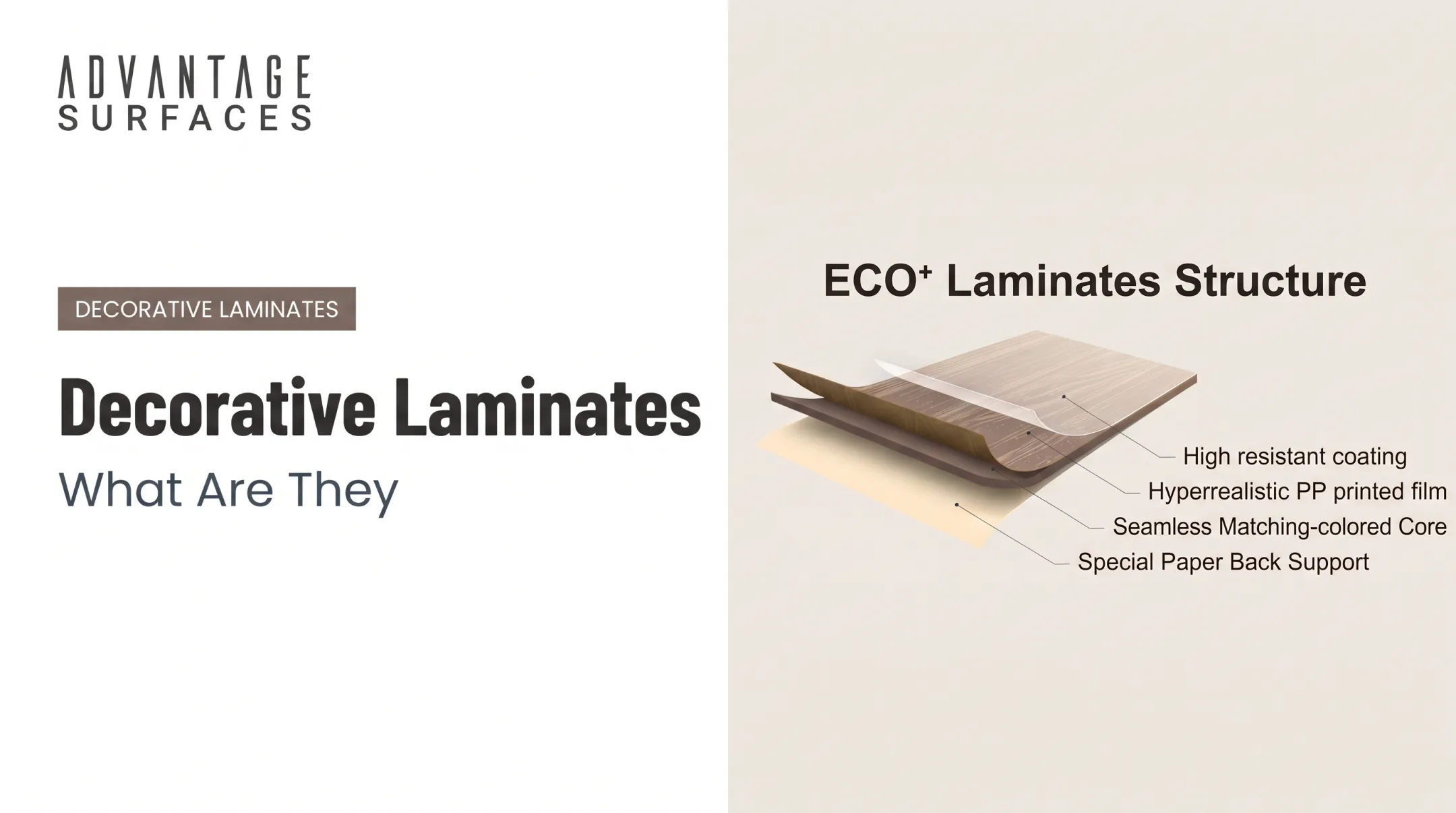
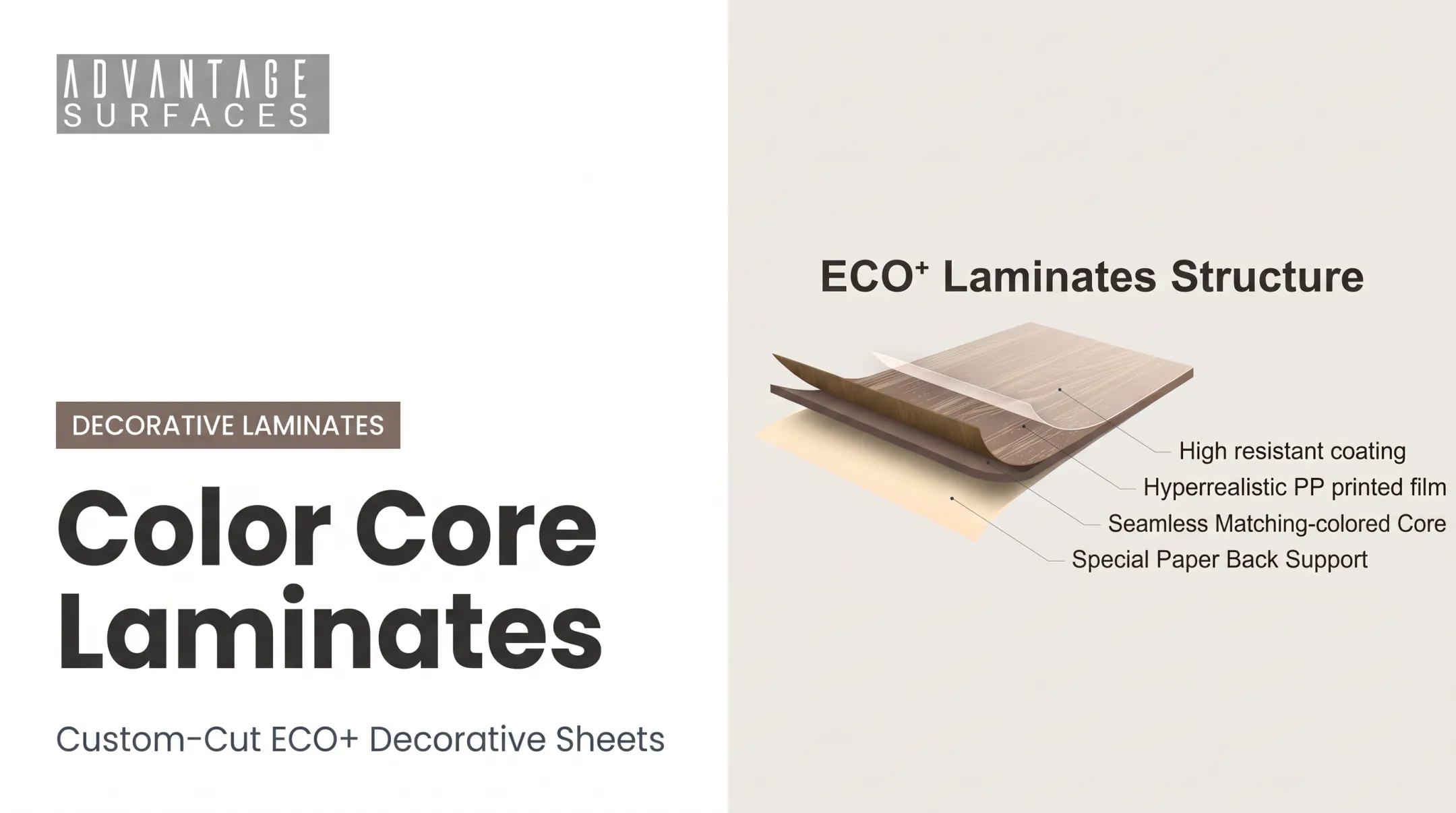
Most decorative laminates share a few structural layers:
- Decorative surface - the colored layer that determines the final look
- Core and substrate - internal body layers, plus the MDF or particleboard the sheet is bonded to during fabrication
- Protective overlay or coating - shields the surface from scratches, stains, and daily wear
- Finish - matte, satin, textured, or sandblasted, depending on the product line
High-pressure laminate (HPL) is commonly described as melamine-treated decorative paper fused over a phenolic-resin kraft core under heat and pressure, then applied to a substrate.
Thermally fused laminate (TFL), by contrast, is pressed directly onto particleboard or MDF in one step, according to the CPA's TFL standard. Know which construction you're buying, since it affects fabrication and edge treatment.
"Solid" doesn't always mean flat or glossy. Finishes vary by manufacturer, so always check the specific product's finish documentation before assuming texture or sheen.
Surface Color vs. Color-Matched Core
Here's a detail that trips up a lot of buyers: a sheet's surface color and its core color aren't always the same thing. Standard laminates often have a dark (sometimes black) core beneath a lighter surface color. Cut or fabricate an edge, and that dark line shows.
A color-matched core avoids this entirely. The ECO+ Solid Color Collection from Advantage Surfaces USA, a distributor of KD Panels (Keding), uses seamless color cores, meaning the color runs through the sheet rather than sitting on top of a contrasting base. This matters most on exposed edges, tight corners, and wrapped or folded details, where a visible seam line would otherwise stand out.

Why Choose Solid Color Laminates?
Solid colors create a calm, neutral backdrop. That's the whole point. In a kitchen with brass pendant lights and a marble-look backsplash, or a reception area with statement artwork, a solid laminate cabinet face lets those elements stand out instead of fighting for attention.
They also simplify material coordination. A single solid color pairs easily with wood, metal, glass, stone, tile, paint, and upholstery, without introducing a second pattern that needs matching.
Performance You Can Verify
Durability claims should come from product documentation, not generic marketing copy. The industry relies on standardized tests, including cleanability, stain resistance, scratch resistance, and impact testing, as outlined by NC State's testing page covering NEMA LD 3 standards.
These are test categories, not guaranteed outcomes for every laminate, so ask your supplier for the specific results tied to the product you're buying.
For ECO+ laminates specifically, Advantage Surfaces USA documents:
- An SGS-certified coating resistant to scratches, chemicals, stains, solvents, alcohol, and dirt
- Non-toxic, food-grade polypropylene construction with zero melamine
- Formaldehyde-free composition, labeled Low Formaldehyde and Low TVOC
Maintenance Expectations
Routine cleaning for ECO+ laminates involves a damp cloth with mild soap and water. Tougher stains may need a non-abrasive household cleaner.
Abrasive pads and harsh chemicals are off-limits. Permanent damage such as deep gouges or burns generally isn't repairable the way a surface stain is.
Health and Sustainability Considerations
Formaldehyde emissions from composite wood cores are federally regulated. The EPA's TSCA rule set formaldehyde limits for particleboard, MDF, and plywood cores, matching earlier California Air Resources Board standards.
If health and indoor air quality matter for your project, ask for emissions documentation rather than taking "eco-friendly" at face value.
ECO+ laminates use food-grade polypropylene instead of standard melamine-paper construction, which is why they're marketed as formaldehyde-free with zero melamine content. Always confirm current wording against the manufacturer's technical sheet, since formulations and certifications can change.
How to Choose the Right Solid Laminate Color
Color families roughly break down by mood and function:
| Color Family | Feel | Examples |
|---|---|---|
| Whites & off-whites | Bright, restrained | Polar White, Titanium White, Off-White |
| Beige, taupe, greige | Adaptable neutral | Buttercream, Mojave, Taupe, Putty Gray |
| Cool grays | Versatile, contemporary | White Smoke, Limestone, Zephyr Gray |
| Deep & dark tones | Depth, drama | Jet Black, Smoky Grey |
| Bold accents | Statement-making | Navy Blue, Light Orange, Lavender |
Undertones, Lighting, and Room Size
Two colors that look nearly identical on a screen can read completely differently in person. A pale taupe-gray like Titanium Silver might pick up warm notes next to oak cabinetry but shift cooler beside brushed nickel hardware. That's undertone at work, and it's why you compare samples in your actual space, not a browser window.
Lighting changes everything too. Check your shortlisted sample in:
- Daylight - near a window at midday
- Artificial light - under your fixtures at night
- Direct light - where sun or spotlights hit directly
- Shadow - in corners or under cabinets
Room size matters as well. Lighter solids like Polar White or Glacier Grey open up small or dim spaces. Darker options like Jet Black add contrast and intimacy, but can visually shrink a tight room if overused.
Finally, think about maintenance realities. High-touch surfaces like cabinet doors show fingerprints and dust more readily in dark, glossy finishes than in muted matte tones. The right color is a trade-off based on your space and traffic level.
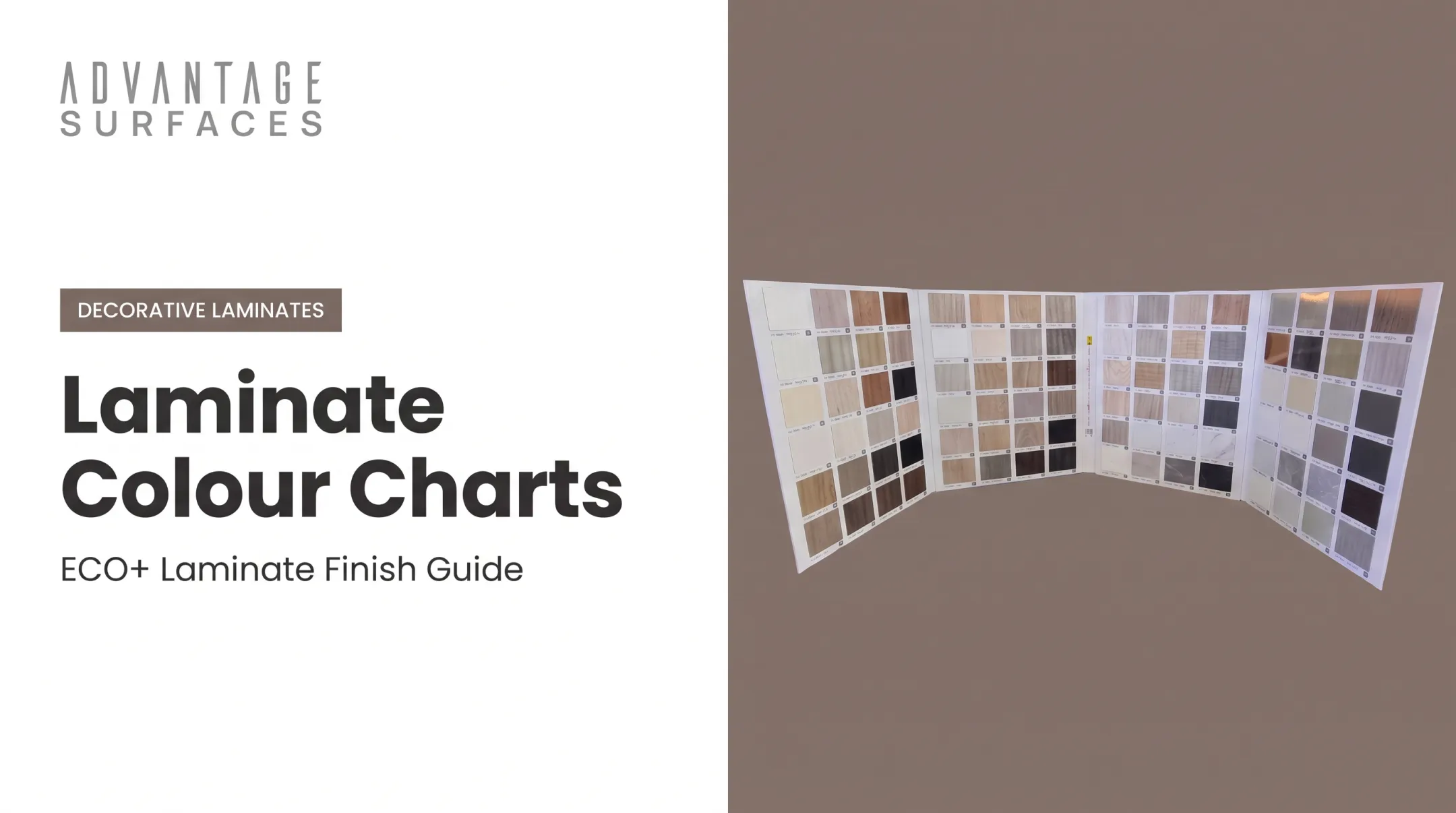
Always compare a physical sample against your actual flooring, hardware, paint, and backsplash before finalizing. A $35 sample book, like the one Advantage Surfaces USA offers across its ECO+ collections, is a lot cheaper than reordering sheets after installation.

Where to Use Solid Color Laminates
Residential Applications
Solid laminates work well across common home surfaces:
- Kitchen and bathroom cabinetry
- Vanities, closet systems, and laundry rooms
- Home offices, media units, and accent panels
Neutral tones like Buttercream or White Gray suit whole-kitchen cabinetry. A bold Navy Blue works well as an island accent or single statement wall.
Commercial and Institutional Spaces
Solid colors deliver a coordinated, easy-to-maintain look in:
- Reception desks and office storage
- Healthcare casework and school furniture
- Hospitality pieces and retail fixtures
Commercial projects carry extra requirements. The 2021 IBC code classifies interior wall and ceiling finishes by flame-spread and smoke-developed ratings. The required class depends on occupancy type and location within the building.
Confirm fire, impact, hygiene, and warranty requirements for your project type before specifying any laminate.
Furniture, Millwork, and Curved Applications
Manufacturers producing furniture, store fixtures, or casework runs benefit from a consistent solid color across repeat production. ECO+ laminates add flexibility for bending and crack resistance, which supports curved or rounded details.
Confirm bend radius, substrate, and adhesive compatibility with your fabricator before cutting material.
Edges, Corners, and Seams
Wherever a corner, cutout, or seam remains visible, edge treatment affects the finished look. A seamless color core, like those used across the ECO+ Solid Color Collection, avoids the dark line that appears when a standard contrasting core is exposed.
What to Check Before Buying
Before you commit to a color or place an order, confirm these specifics:
- Sheet dimensions and thickness - most ECO+ solid-color sheets run 4 ft x 8 ft at 0.8mm thickness
- Finish and texture - Silky Matte, Sandblasted, or other options vary by collection
- Color-core availability - confirm whether the core matches the surface color
- Substrate compatibility and adhesive requirements - check with your fabricator
- Grade and intended application - cabinetry, wall paneling, or specialty fixtures
- Warranty and lead time - especially for bulk or custom orders
When estimating material needs, measure total surface area, account for layout direction, cutouts, seams, and edge treatments, and add a reasonable waste allowance. Have your fabricator verify final quantities before ordering; a flat measurement rarely matches real-world cutting yield.
Professional buyers specifying for architectural or commercial projects should also request technical data sheets, care instructions, and any available emissions documentation up front, not after installation begins.
If you're buying in volume, confirm whether your chosen color is in stock, made to order, or subject to minimum quantities. Bulk cabinet and commercial programs often need this clarified early to avoid delays.
How to Order and Plan Your Project
A practical ordering sequence looks like this:
- Define the application - cabinetry, wall panel, furniture, or fixture
- Shortlist 3-5 colors from your chosen family
- Order physical samples rather than relying on screen colors
- Compare samples on-site under your actual lighting and finishes
- Confirm technical specs - thickness, finish, core type, substrate fit
- Finalize measurements with your fabricator
- Place the order with correct quantity and delivery details
What Affects Pricing
Total cost depends on more than the sheet price. Factors include:
- Brand and finish (matte vs. sandblasted vs. metallic)
- Sheet size and color-core construction
- Order quantity and custom cutting
- Shipping and fabrication labor
- Substrate prep, edge banding, and adhesives
Material-only pricing is just one piece. A finished, installed project also includes fabrication, substrate preparation, edge work, labor, and delivery. Those costs vary too widely by region and fabricator to quote a single national number.
For reference, the ECO+ Solid Color Collection from Advantage Surfaces USA lists individual 4 ft x 8 ft sheets starting around $116.99. Premium finishes like Titanium Gray and Platinum are priced near $135.99.

The company offers custom-sized sheets for non-standard panel programs and free standard shipping within the continental United States. Confirm current terms and lead times before finalizing a bulk order.
If you're weighing a solid color for a larger kitchen, office, or commercial build-out, request physical samples first. Reach Advantage Surfaces USA at info@advantagesurfacesusa.com to talk through color options, custom sizing, or bulk quantities before you approve a final selection.
Frequently Asked Questions
What is the average cost of laminates?
Laminate prices vary by type, sheet size, thickness, finish, quantity, and shipping. Material-only costs differ from installed projects, so request a quote for your specific sheet count and finish.
What colors are available for laminate?
Common families include white, cream, beige, taupe, greige, gray, black, brown, green, and blue, plus accent colors like navy or lavender. Check current manufacturer collections and request physical samples before deciding.
What is the most popular laminate color?
Popularity shifts by application, market, and year. Versatile neutrals remain in steady demand, but there's no single universally "most popular" color across residential and commercial projects.
What color laminate is best?
The best choice depends on your lighting, surrounding finishes, room size, maintenance needs, and desired contrast. Compare physical samples in your actual space before finalizing any color.
What are the hottest laminate flooring colors in 2026?
Warm neutrals, pale oak, greige, and richer browns lead 2026 flooring trend coverage, according to Floor Covering Weekly's TISE coverage. Those trends do not dictate the best solid color for cabinets, furniture, or millwork sheets.